
Guide to using SPICT-LIS™
Why use the SPICT-LIS™?
SPICT-LIS™ helps identify people with one or more general indicators of poor or deteriorating health and clinical signs of serious health conditions for review and care planning.
Offer the best available appropriate treatments as well as holistic palliative care.
SPICT-LIS™ looks for changes in health status, burden of illness and increasing care needs.
Timely identification avoids harm and improves treatment and care of patients and families.
Using SPICT™ to assess people’s needs and plan care.
- Poorly controlled symptoms: give the best available, appropriate treatments for underlying conditions, stop medicines/tests not of benefit; use effective palliative symptom control measures.
- People who are increasingly dependent on others due to deteriorating functional ability, physical frailty and/or mental health problems often need additional care and support.
- Unplanned hospital admission, more clinic visits or a decline in health status: review current care, treatment and medication; discuss care options; plan for managing further deterioration.
- Complex symptoms or other patient/family needs; consider specialist palliative care review or involve another appropriate specialist or service, if available.
- Plan proactive, coordinated care at home from the primary care team and/or other community services or workers. Involve the local community. Support family carers.
- Assess decision-making capacity. Plan ahead if this will deteriorate. Record details of close family/friends and any legal proxies. Involve them in decision-making if capacity is impaired.
- Agree, record, share and review a future care plan; include plans for urgent care and treatment if the person’s health (or care at home) deteriorates rapidly or unexpectedly.
Talking about future care planning
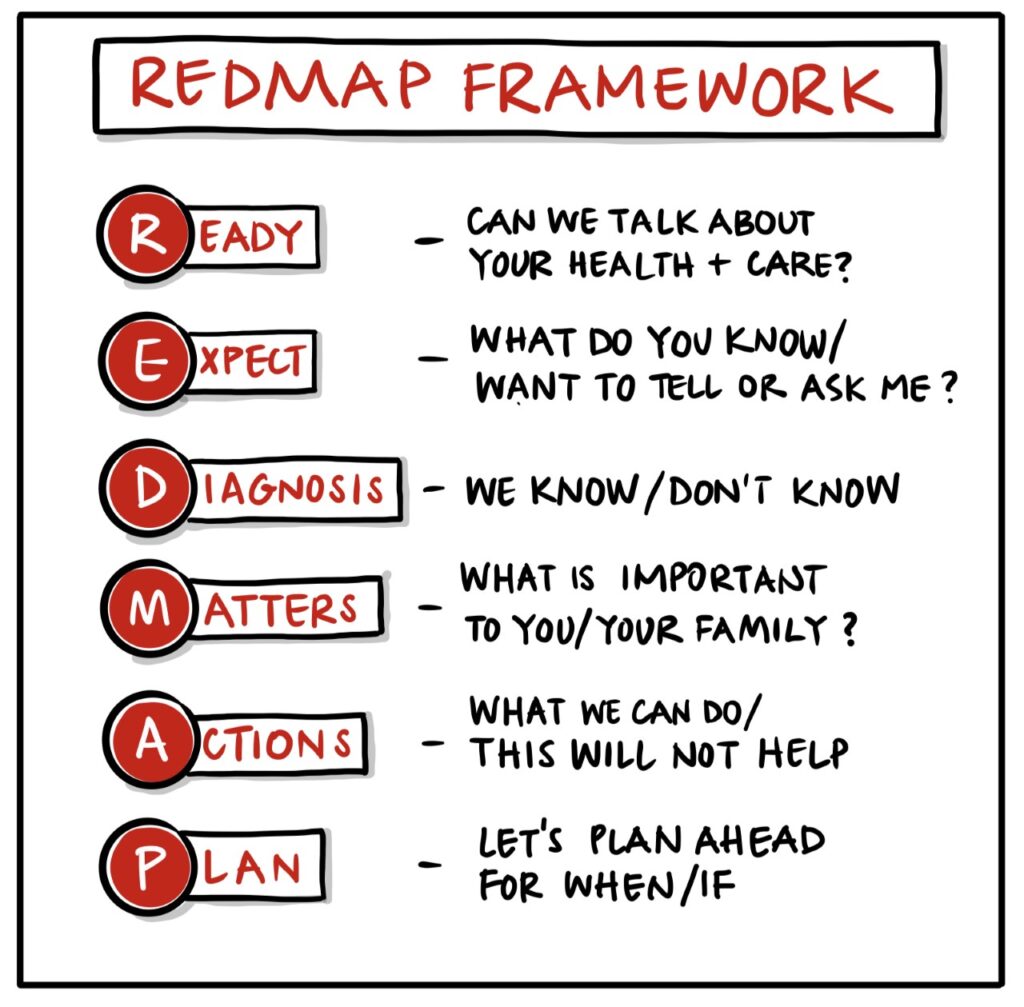
Talk about:
- What matters to you if your health or care change.
- Benefits, harms and costs of hospital admission, outpatient visits, tests and treatments (e.g., IV antibiotics/fluids; surgery; cancer treatments, more treatments for heart or kidney disease; tube feeding; oxygen/ventilation.
- Treatments that will not work or leave them in much poorer health. (e.g., cardiopulmonary resuscitation)
- Choosing legal proxy decision-makers in case decision-making capacity is lost in the future.
- Help and support for family/ informal carers.
Tips on starting conversations about care planning
- I wish we had a treatment for…, but could we talk about what we can do if that’s not possible?
- I am glad you feel better and I hope you will stay well, but I am worried that you could get ill with…
- Can we talk about how we manage not knowing exactly what will happen and when?
- If you got less well, what would be important for you? What would she say about this, why is that?
- Some people want to talk about whether to go to hospital or be at home if they are very ill…